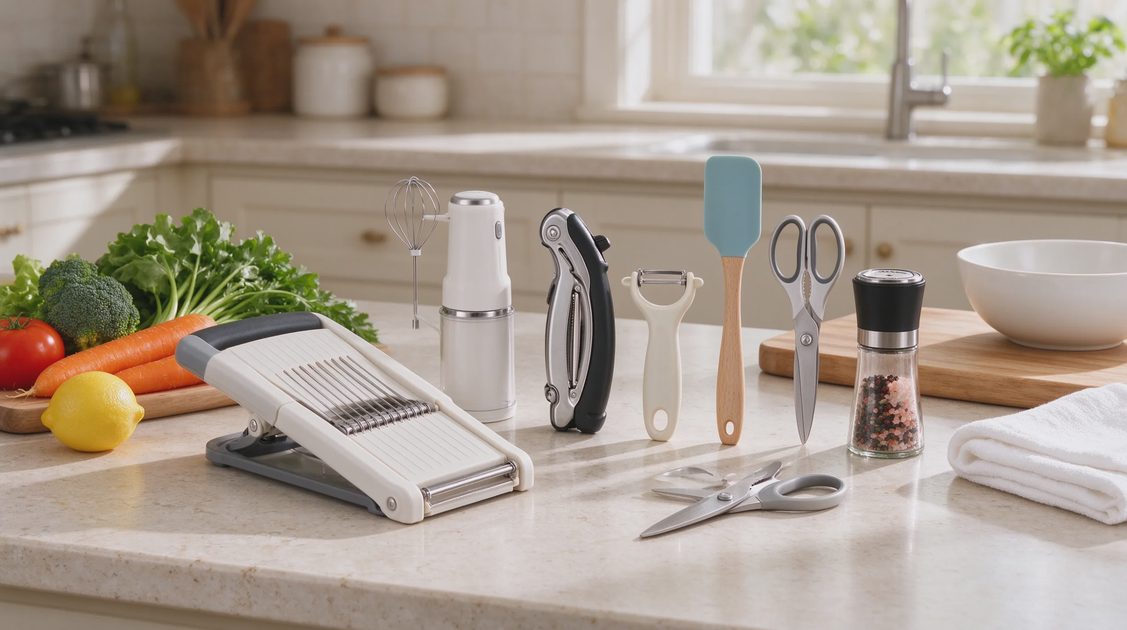
Kitchen gadgets promise speed, consistency, or new capabilities. Some deliver and become part of the weekly routine. Others create storage problems, cleaning burdens, or one-time novelty that fades quickly. The difference is rarely about brand prestige. It is about whether the tool matches the cooking that already happens in the household.
I will not invent a personal inventory of specific products or claim tested results on particular models. This article outlines the practical patterns that predict which gadgets earn lasting use and which ones tend to become regrets. Use the patterns to evaluate any new tool before it claims counter or drawer space.
Buy for the life you have, not the brochure you were shown.
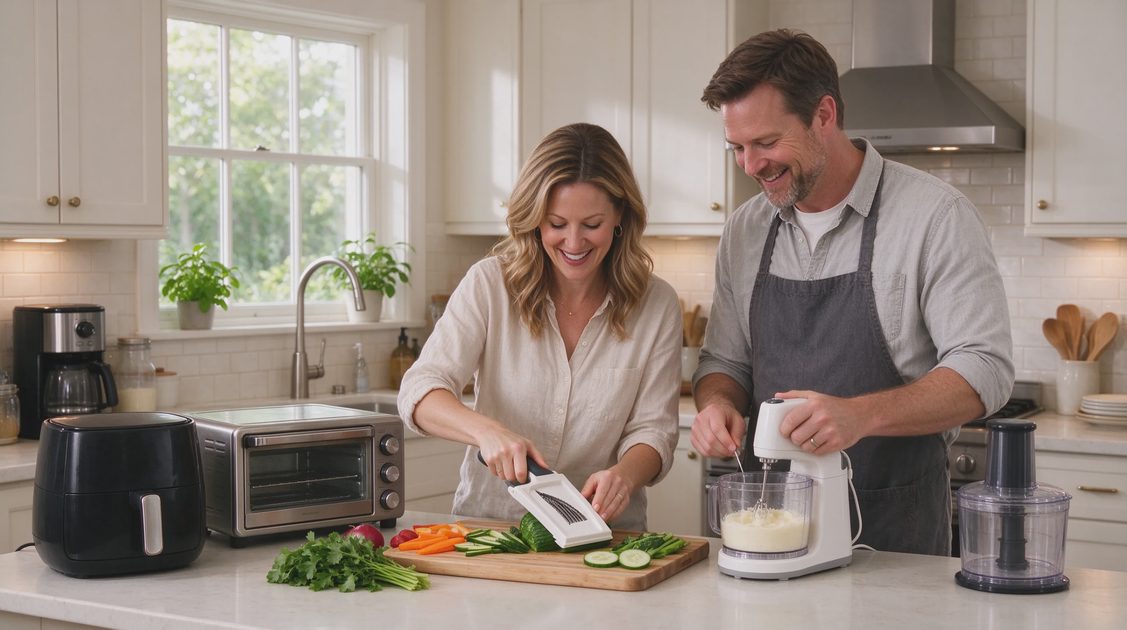
Why Kitchen Gadgets Fail at Different Rates
A tool that solves a frequent, slightly annoying task in a way that is faster or better than the existing method tends to stay in rotation. A tool that performs a task you rarely do, requires significant cleanup, or duplicates something you already own tends to migrate to the back of a cabinet. Frequency of the underlying job, ease of cleaning, and storage cost are stronger predictors than marketing claims.
The Real Cost of a Gadget
Purchase price is visible. Counter or drawer space, cleaning time after each use, and the mental load of an extra item are ongoing costs. A gadget that is used weekly can justify those costs. A gadget used three times a year rarely does.
Traits of Gadgets That Earn Weekly Use
Certain characteristics appear repeatedly among tools that stay active.
They Address a High-Frequency Task
Daily or near-daily jobs—heating water, toasting, simple blending, basic coffee preparation, or consistent knife work—support dedicated tools. Low-frequency jobs (specialty holiday baking, occasional deep frying, rare spice grinding) usually do not justify permanent residents on the counter or in prime drawer space.
Cleanup Is Manageable
If the tool can be wiped or quickly rinsed and returned to ready status, it is more likely to be used again soon. Multi-part devices with crevices, non-dishwasher-safe pieces, or heavy residue raise the barrier to repeated use. Over time the cleaning cost outweighs the performance benefit for many households.
They Are Faster or Clearly Better Than the Alternative
A gadget must improve on the knife, pot, oven, or pan you already own in a way you notice. Marginal improvements that require extra steps or setup often lose to the familiar method on busy weeknights.
Storage Demands Are Proportionate
Countertop tools need to earn permanent space. Drawer tools need to remain accessible. Bulky single-purpose items that require disassembly for storage are at higher risk of abandonment.
They Match the Household’s Actual Cooking Style
A tool that assumes elaborate meal prep will not thrive in a kitchen that relies on simple weeknight cooking. Honest assessment of how the household actually cooks prevents most mismatches.
Traits of Gadgets That Often Become Regrets
The opposite patterns are equally consistent.
Single-Purpose Tools for Rare Tasks
Devices that perform only one infrequent job occupy space for long periods of non-use. Unless that job is both important and poorly handled by existing tools, the regret rate is high.
Complex Multi-Part Systems
More pieces generally mean more cleaning and more opportunities for parts to go missing. Complexity that is not rewarded by frequent, high-value use becomes a liability.
Tools That Duplicate Existing Capabilities
If the full oven, a good skillet, or a basic blender already handles the task adequately, a specialized gadget must offer a clear, repeated advantage. Without that advantage it becomes redundant clutter.
Impulse Purchases Driven by Demonstration or Trends
In-store demonstrations and viral videos create temporary desire. The desire often fades once the tool is home and the cleanup reality appears. Waiting a week before purchasing reduces this category of regret.
Items That Require Ongoing Consumables or Subscriptions
Some gadgets depend on proprietary pods, filters, or bags. The ongoing cost and supply dependency can turn an initial convenience into a long-term annoyance.
A Practical Evaluation Sequence Before Buying
Work through these questions while the tool is still in the store or in the online cart.
How Often Do I Perform the Task This Tool Claims to Improve?
Daily or several times a week supports a dedicated tool. Monthly or less argues for a multi-purpose alternative or doing without.
What Do I Currently Use, and Where Does It Fall Short?
If the current method is only mildly inconvenient, the new tool needs to be dramatically better to justify space and cost. If the current method is genuinely frustrating or unsafe, the case is stronger.
What Does Cleanup Look Like After Real Use?
Imagine the state of the tool after the messiest likely job. If the cleaning effort feels disproportionate, usage frequency will drop.
Where Will It Live, and What Gets Displaced?
Counter space and prime drawer space are limited. Identify the exact location and what, if anything, will be moved or discarded to make room.
Is There a Simpler Tool That Covers Most of the Benefit?
Sometimes a better knife, a reliable sheet pan, or an improved basic appliance delivers most of the value without the specialized footprint.
Categories That Frequently Justify Their Place
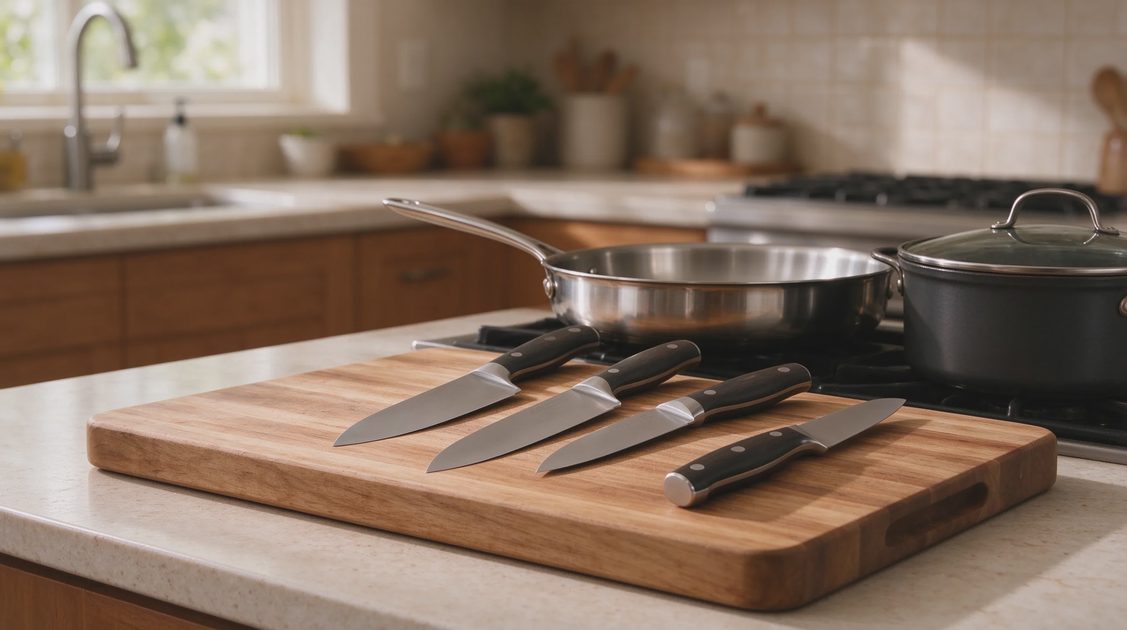
Reliable everyday knives and a workable cutting board. A solid skillet and sauce pan. A basic blender or immersion blender if smoothies or purees are common. A kettle if hot water is used daily. A toaster or toaster oven if toast and small heating jobs are frequent. Measuring tools that are easy to read and clean. These earn their keep through constant, uncomplicated use.
Categories That Require Extra Caution
Highly specialized single-job machines. Large appliances that perform tasks the main oven already handles adequately. Gadget sets with many interlocking parts. Tools that look clever in demonstration but demand precise technique or extensive cleanup. Items purchased primarily because they are currently popular.
Managing the Gadgets Already in the Kitchen
Periodically review what has not been used in the last several months. If a tool has not earned a place in the recent routine and does not serve a seasonal purpose you value, it is a candidate for donation, sale, or recycling. Freeing space often improves the usability of the tools that remain.
When a new tool arrives, decide in advance what older item it replaces or whether it truly adds capacity the kitchen lacked. Avoid simple accumulation.
Closing Recommendation
Weekly-use kitchen tools share common traits: they solve frequent jobs, clean up reasonably, improve clearly on the alternatives, and fit the cooking that already happens. Regrettable gadgets usually fail one or more of those tests—especially frequency and cleanup.
Before any new purchase, estimate real usage frequency, picture the post-use cleanup, and identify the storage cost. Prefer tools that will still be reached for on ordinary Tuesdays rather than only on ambitious weekends. The useful kitchen is equipped for the meals that actually occur, not for the ones that appear in product demonstrations.
When in doubt, wait. A tool that is still compelling after a week of reflection and that survives the frequency-and-cleanup test is far more likely to become part of the weekly routine than one purchased in a moment of enthusiasm. That restraint keeps the counters clearer and the drawers more useful—exactly the outcome most households want from their kitchen tools.
No notes yet — write the first.