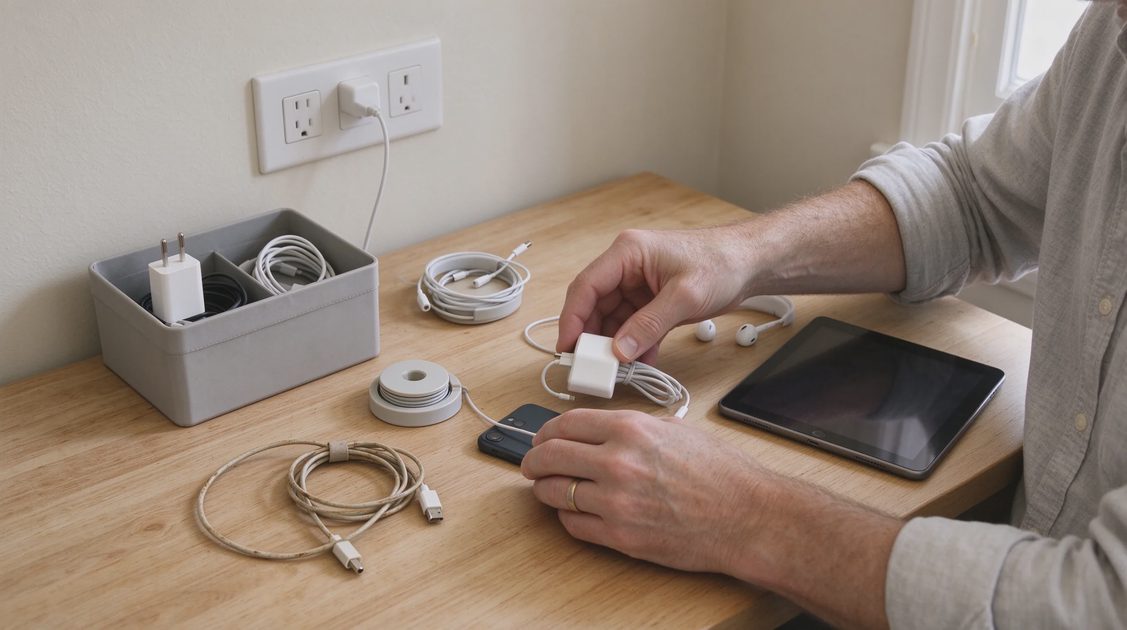
Every household with more than one device eventually develops a cable problem. Chargers migrate to couch cushions, kitchen counters, and backpacks. Duplicate cords multiply. The one cable that fits a particular device is never in the place someone is looking. The result is small daily friction that adds up—delayed starts to the day, interrupted work or school tasks, and a persistent low-level mess.
A complicated organizer system that requires perfect discipline usually fails in a real family. What works is a simple, visible structure based on places and purposes rather than on perfect labeling or constant maintenance. This approach keeps the most-used charging gear easy to find, reduces the number of orphaned cables, and makes it obvious when something is missing or broken.
Buy for the life you have, not the brochure you were shown. That includes the charging habits your household already has.
Why Cable Clutter Persists
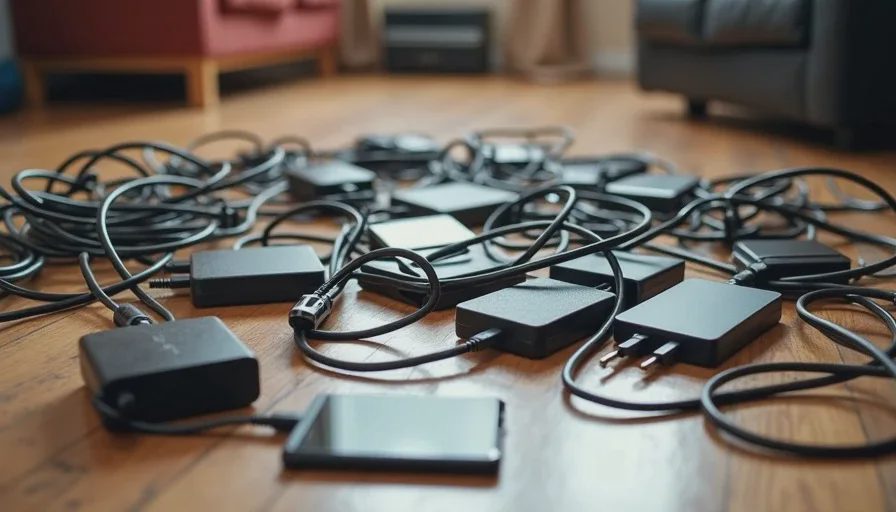
Devices arrive with their own chargers. Old devices leave their cables behind. Guests bring different standards. Children move chargers between rooms. Without an agreed default location, every cord becomes temporary and every surface becomes a potential landing spot. The problem is less about the number of cables and more about the absence of clear homes for them.
What a Family-Friendly System Needs to Do
Make the most common charging needs obvious and reachable. Reduce the time spent hunting for a compatible cable. Prevent the slow accumulation of broken or obsolete cords. Survive imperfect compliance—because no system used by multiple people remains perfect. Require only light, occasional maintenance rather than daily perfection.
Step One: Gather and Sort Everything in One Pass
A single reset creates the foundation.
Collect Every Cable and Charger
Go through drawers, bags, nightstands, kitchen counters, and car interiors. Bring every power adapter, USB cable, brick, and specialty charger into one central location. Include old phone chargers, camera cables, and anything that has been “temporarily” stored for months.
Test Before You Keep
Plug each charger and cable into a device or a simple tester if you have one. Discard or recycle anything that fails to charge, has damaged insulation, bent connectors, or intermittent connection. Keeping broken cables guarantees future frustration.
Group by Purpose and Connector Type
Sort into broad categories: phone and tablet cables, laptop chargers, wearable and small-device cables, audio and specialty cords, and unknown or obsolete items. Within the phone and tablet group, separate by connector if your household still uses more than one standard. This sorting makes the next decisions easier.
Decide What the Household Actually Uses
Keep enough of each commonly used type to cover daily needs plus a small buffer. Excess identical cables create clutter without adding usefulness. Obsolete connectors for devices you no longer own can be recycled or discarded unless you have a specific remaining use.
Step Two: Create Place-Based Charging Homes
Location beats labeling for family compliance.
Establish a Primary Household Charging Station
Choose one accessible spot— a section of kitchen counter, a console table near the entrance, or a dedicated shelf—that becomes the default place for overnight charging of phones and tablets. Equip it with the cables the household uses most, a power strip with adequate spacing, and enough outlets or ports for the usual evening load. Visibility matters; a station that is easy to see is easier to use consistently.
Add Secondary Stations Only Where They Solve Real Friction
A bedroom nightstand station for the people who charge there. A work desk station for laptop and monitor cables that rarely move. A small basket or hook near the door for the cable that travels in a bag. Avoid creating a station in every room; too many homes recreate the original clutter problem at smaller scale.
Keep Travel and Spare Cables Separate
Store one or two ready-to-grab travel kits (cable plus adapter) in a known bag or drawer. Keep a small reserve of spares in a labeled box or bin that is not part of the daily stations. This prevents the primary station from becoming a mixed collection of daily-use and occasional-use items.
Step Three: Make Compatibility and Ownership Obvious
Small visual cues reduce questions and searching.
Use Simple, Durable Identification
Color-coded tape, small tags, or distinct cable colors help family members return cables to the right place and avoid mixing similar-looking cords. Perfect labeling systems often fail; a quick visual distinction that survives handling is enough.
Standardize Where Practical
If the household can move toward fewer connector types over time, daily friction drops. When new devices are purchased, prefer cables and chargers that match the existing dominant standard. Complete uniformity is rarely possible; reducing the number of exceptions still helps.
Teach the Default Rule
The simplest family rule is usually the most durable: “Chargers live at the station when not in active use.” When something is needed elsewhere, it returns afterward. Perfect adherence is unnecessary; consistent enough returns keep the system functional.
Step Four: Manage the Slow Accumulation
Cable clutter returns unless there is a light maintenance habit.
Schedule a Short Periodic Review
Every few months, or when the station starts looking disordered, spend ten minutes returning strays, testing any questionable cables, and removing anything that has become obsolete. This is far easier than another full household gather.
Handle Broken or Orphaned Cables Immediately
When a cable fails, remove it from the station the same day. When a device is retired, decide immediately whether its charger still has a use; if not, recycle it. Delayed decisions are how drawers fill with unusable cords.
Control Inflow
New devices bring new cables. Before the new cable joins the general population, decide which station or reserve bin it belongs in. If it replaces an older standard, remove the older cables once the transition is complete.
Practical Furniture and Tool Choices That Help
Expensive cable-management furniture is unnecessary. Simple tools usually outperform it.
Power Strips With Spacing
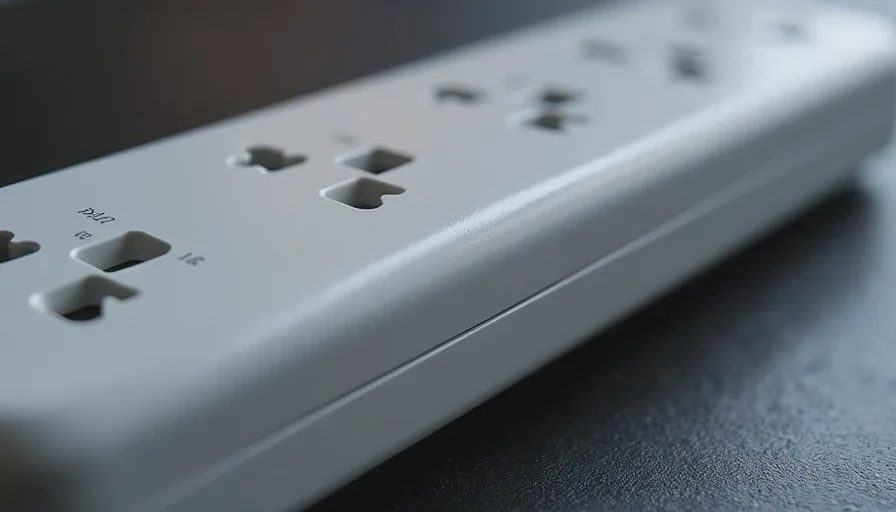
Choose strips that leave enough room between outlets for larger USB bricks. Overcrowded strips create heat and frustration.
Short, Dedicated Cables at Stations
Long cables tangle more easily. At fixed stations, shorter cables sized to the surface reduce mess. Keep longer cables for travel or flexible use.
A Single Visible Reserve Bin
One clearly marked bin or drawer for spares and less-used cables prevents them from migrating into daily spaces. If the bin overflows, it is time for another sorting pass.
Basic Cable Ties or Velcro Straps
Loose coils secured with reusable ties stay neater in drawers and bags than tangled nests. Avoid single-use plastic that becomes trash after one adjustment.
What Success Looks Like in a Real Household
People can find a working charger for the most common devices without asking or searching multiple rooms. Overnight charging happens at predictable places. The number of mystery cables stays low. Broken cords are removed instead of left to confuse the next person. The system tolerates imperfect compliance without collapsing.
Common Mistakes That Undermine the System
Creating too many micro-stations. Keeping every cable “just in case” without a periodic purge. Using a storage method that hides cables so well that no one remembers what is there. Expecting children or busy adults to follow a complex labeling scheme. Ignoring the travel cables that live in bags and cars until they become a second clutter problem.
Closing Recommendation
Gather everything once, discard what does not work, and give the cables you actually use clear homes based on place and purpose. Maintain a primary charging station for daily devices, limited secondary stations only where they solve real friction, and a single reserve for spares. Use simple visual cues rather than elaborate systems, and schedule light periodic reviews instead of waiting for chaos to return.
The useful organization method is the one the household will still follow on a busy weekday morning. Keep it visible, keep it simple, and keep the broken and obsolete items out of circulation. When chargers and cables have obvious homes, the daily search ends and the devices stay ready for the life already happening in the house. That is a quieter, more practical upgrade than another drawer full of cords.

No notes yet — write the first.