
Most technology advice assumes you want the newest thing, the highest number on the spec sheet, or the product that looks impressive in a launch video. That approach works fine if your hobby is collecting gadgets. It fails when you simply want a phone that lasts through the workday, a laptop that handles school emails and video calls without drama, or a kitchen appliance that does its job without becoming another thing to troubleshoot.
I started this site because I spent fifteen years watching people walk into consumer-electronics stores with reasonable questions and leave with more confusion than they arrived with. My name is Trevor Kincaid. I live in Pittsburgh with my wife Erica and our two kids. I used to train retail teams on how to explain phones, laptops, televisions, headphones, appliances, and smart-home gear. I saw the gap between what the brochure promised and what actually happened after the return window closed. That gap is why this blog exists.
Technology should make daily life easier. When it does not, the problem is rarely the person using it. More often the problem is advice written for enthusiasts, marketers, or people whose idea of a normal day looks nothing like yours.
The Problem With Most Tech Advice
A lot of reviews focus on laboratory scores, peak performance numbers, or the excitement of unboxing day. Those measurements matter in some contexts. They matter less when you are standing in your kitchen at 6:30 a.m. trying to make coffee before the school bus arrives, or when the Wi-Fi drops during a family video call, or when a three-year-old laptop starts taking four minutes to open a spreadsheet.
Ordinary households do not need every feature. They need reliability, reasonable setup effort, clear maintenance expectations, and an honest sense of total cost over time. They need someone to say, without apology, which product is good enough and which one is simply more expensive.
What “Useful” Actually Means Here
Useful means the device or the advice fits the life you already have. It does not require you to change your habits to justify the purchase. It does not demand constant attention, subscription fees you did not plan for, or a learning curve that eats an entire weekend.
Useful also means knowing when not to buy. Sometimes the best upgrade is a better cable, a firmware update, a different setting, or the decision to keep what you already own for another year. Repair before replace is not nostalgia. It is practical economics and less waste.
Who This Site Is For
This site is written for adults who want better phones, computers, kitchen tools, and everyday electronics without becoming technology enthusiasts. You are busy. You have a household budget. You would rather spend Saturday afternoon doing almost anything else than comparing processor benchmarks.
If that describes you, you are in the right place. I will not assume you care about the latest chipset name. I will assume you care whether the thing works after six months, whether setup is straightforward, and whether the warranty or repair options are realistic.
How I Approach Every Recommendation
Every piece of advice on this site starts from the same place: the life you actually live, not the idealized one shown in product photography.
Real Household Use Comes First
I test and evaluate products the way families use them. That means cooking real meals, charging devices overnight in a busy kitchen, sharing bandwidth with kids who stream while adults work, and noticing what still works after the novelty wears off. Laboratory numbers have their place. Daily friction has a bigger one.
Total Cost Matters More Than Sticker Price
The price on the box is only the beginning. Setup time, accessories you did not expect to need, subscription services, energy use, repair parts, and the cost of eventual replacement all belong in the conversation. A cheaper device that fails early or demands constant workarounds is rarely the bargain it first appears to be.
Clear Limits Are a Feature, Not a Weakness
I will tell you who should buy a product and who should skip it. I will name the situations where a mid-range option outperforms a premium one for most households. I will admit when a popular feature turns out to be unused by most families after the first month. Honesty about limitations builds more trust than a list of every possible strength.
Repairability and Longevity Are Part of the Decision
Before recommending a replacement, I ask whether the existing device can still do the job with a modest repair, a software update, or a change in how it is used. Secondhand and refurbished options receive the same scrutiny as new ones. An estate-sale find that still works can be a better upgrade than a brand-new device that adds complexity you do not need.
What You Can Expect From the Categories
The site is organized around the full arc of ownership rather than isolated unboxing moments.
The Buyer’s Counter
Practical buying guides for phones, laptops, tablets, televisions, headphones, appliances, and accessories. These focus on matching the product to real needs instead of ranking everything by raw specification count.
Setup Without the Headache
Guides for configuring, connecting, updating, and maintaining new devices. The goal is to reduce the first-week frustration that makes people regret a purchase they would otherwise like.
The Kitchen Workbench
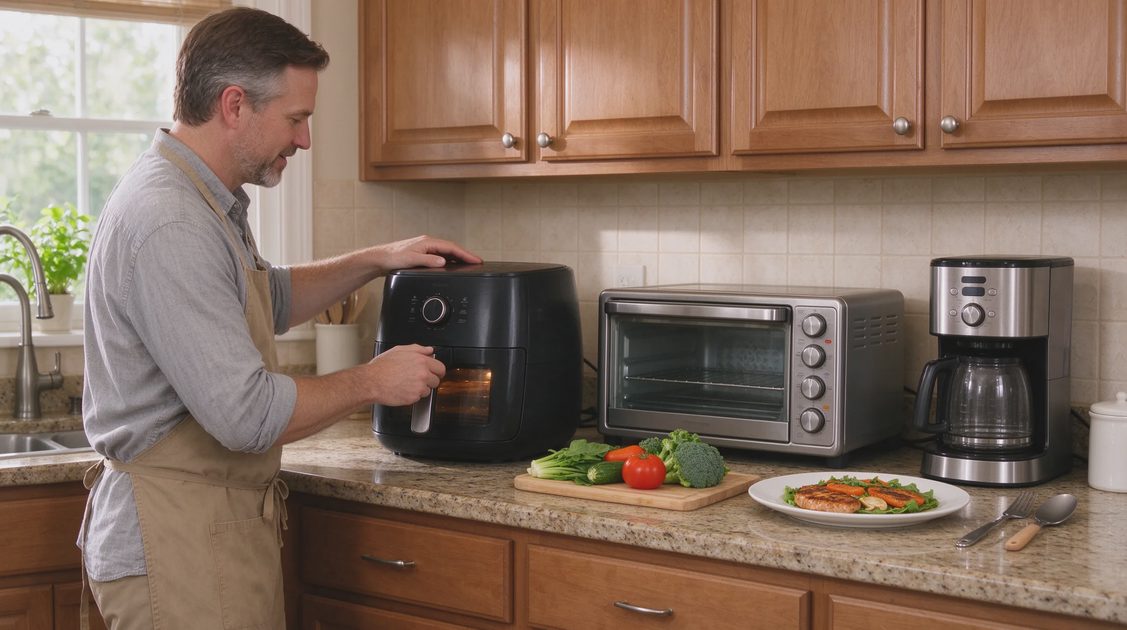
Reviews and experiments with countertop appliances, coffee equipment, cooking technology, and connected kitchen products. Kitchens reveal the difference between marketing claims and daily performance faster than almost any other room in the house.
Second Life Electronics
Advice on refurbished, used, repairable, upgradeable, and older devices. Not every problem requires a new purchase. Sometimes the smarter move is learning what to check before buying used or deciding when repair still makes sense.
Worth It After the Hype
Longer-term tests, ownership reports, product failures, retailer claims, and calm responses to technology trends. Launch-day excitement fades. Six months of real use tells a clearer story.

The Guiding Phrase
Buy for the life you have, not the brochure you were shown.
That sentence is the filter for everything published here. It keeps the focus on actual households instead of idealized ones. It resists the pressure to treat the most expensive option as the default winner. It leaves room for the honest conclusion that sometimes the useful upgrade is no upgrade at all.
How This Site Makes Money and Keeps Trust
Affiliate links will appear and will be clearly labeled. They will never determine editorial conclusions. There are no pay-to-win rankings and no guaranteed positive reviews. Revenue comes from carefully selected retailer, refurbished-device, repair-part, and accessory links that align with the advice given. Testing methods will be explained. Articles will be updated when prices, firmware, or availability change in meaningful ways.
An optional newsletter, The Useful Upgrade List, will offer one worthwhile purchase, one setup improvement, and one thing to skip each week. It exists to be useful, not to fill an inbox.
A Note on Voice and Expectations
I write like the neighbor who has read the manual, tested the product in a real kitchen, and checked what the repair shop actually charges. I translate technical language into household consequences. I state the best use case, the worst use case, and the honest alternative. I include setup effort, maintenance, warranty, repairability, and total cost because those details decide whether a purchase improves daily life or quietly makes it harder.
I will not call ordinary improvements “game-changing.” I will not recommend a product solely because it has more features. I will not hide important weaknesses behind vague pros and cons.
If you want breathless launch coverage, there are many other places to find it. If you want clear answers before spending two hundred, eight hundred, or two thousand dollars, you are welcome here.
Technology should serve the life you already live. When it does, the upgrade is useful. When it does not, the honest answer is often to keep what you have, fix what is broken, or skip the purchase entirely. That is the standard this site will hold.
Welcome to The Useful Upgrade. Let’s start with the decisions that actually matter.


No notes yet — write the first.